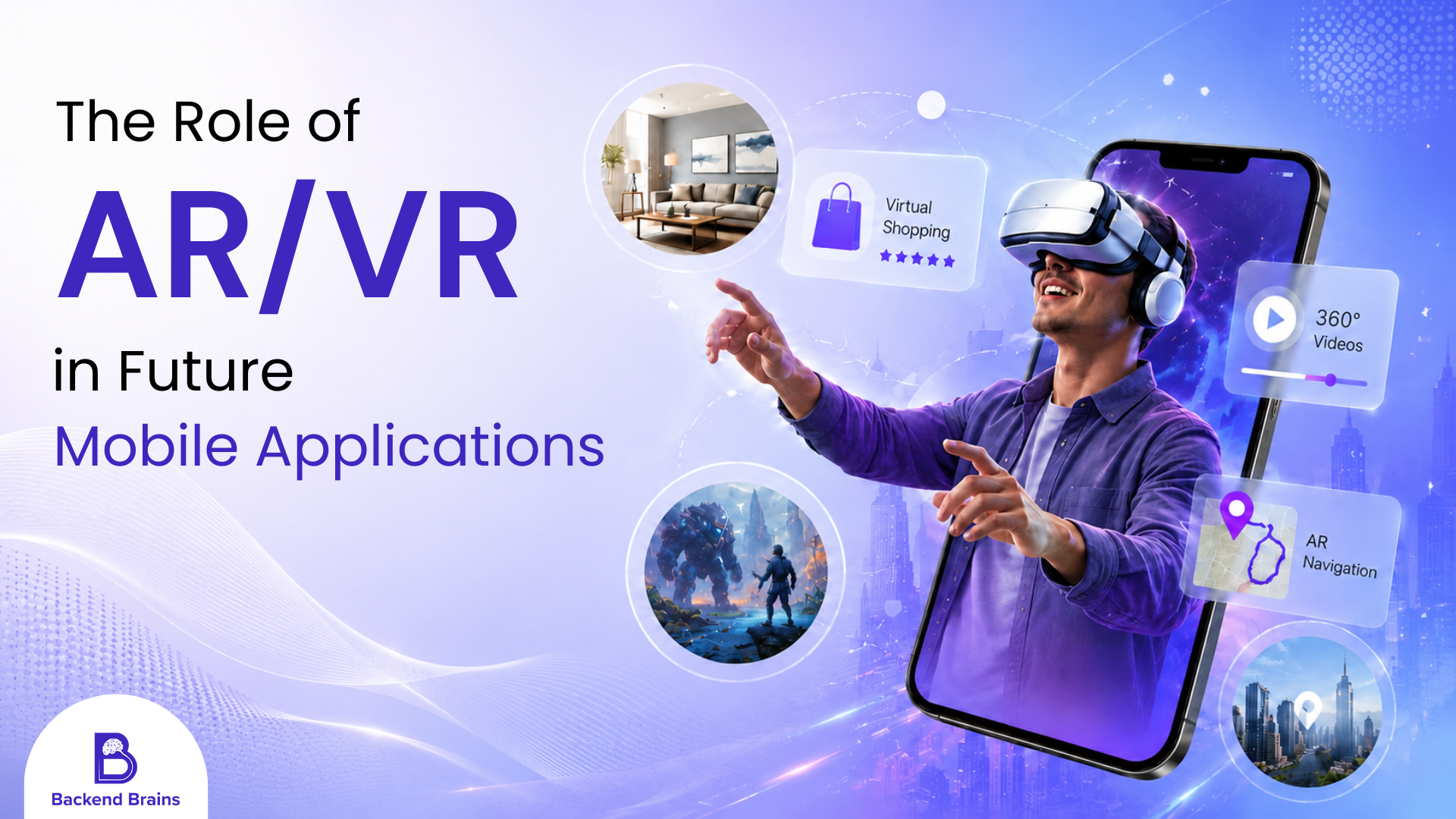

In recent years, Augmented Reality (AR) and Virtual Reality (VR) have transformed from futuristic concepts into practical technologies that are reshaping the mobile app industry. Businesses across healthcare, education, retail, gaming, real estate, and e-commerce are increasingly integrating AR and VR into their mobile applications to provide immersive and interactive user experiences. As technology continues to evolve, AR/VR is expected to play a major role in the future of mobile app development.
Understanding AR and VR Technologies
Augmented Reality enhances the real-world environment by overlaying digital elements such as images, animations, and information onto a user’s surroundings through a smartphone or tablet camera. Popular examples include virtual furniture placement apps and AR filters on social media platforms.
Virtual Reality, on the other hand, creates a completely immersive digital environment where users can interact with a virtual world using VR headsets and mobile applications. VR is widely used in gaming, virtual tours, training simulations, and education.
Both technologies are revolutionizing the way users interact with mobile apps, making experiences more engaging and personalized.
How AR/VR Is Transforming Mobile Applications
1. Enhanced User Experience
AR and VR technologies provide highly interactive experiences that keep users engaged for longer periods. Businesses are using immersive designs and real-time interactions to improve customer satisfaction and increase retention rates. Mobile app developers are focusing on creating user-friendly AR/VR interfaces that deliver smooth and realistic experiences.
2. Revolutionising the Gaming Industry
The gaming industry has been one of the biggest beneficiaries of AR/VR technology. Mobile games with AR features allow users to interact with virtual objects in real-world environments, while VR gaming offers complete immersion. These innovations are creating new opportunities for app development companies to build advanced gaming applications.
3. Transforming E-Commerce and Retail
AR-powered shopping apps allow users to virtually try products before purchasing. Customers can see how furniture fits in their homes, test makeup products, or try on clothing virtually. This improves buying confidence and reduces return rates for businesses.
Retail companies investing in mobile app development with AR features are gaining a competitive edge by offering unique shopping experiences.
4. Improving Healthcare Applications
Healthcare mobile apps are leveraging AR and VR for medical training, patient education, and virtual consultations. VR simulations help doctors practice complex procedures, while AR assists surgeons with real-time guidance during operations. These innovations are improving healthcare efficiency and patient outcomes.
5. Advancing Education and Training
Educational mobile apps are becoming more interactive with AR and VR integration. Students can explore virtual laboratories, historical sites, and 3D models directly from their smartphones. Businesses and organizations are also using VR-based training apps for employee skill development and safety simulations.
Benefits of AR/VR in Mobile App Development
- Improved customer engagement
- Better user interaction and retention
- Enhanced visualization of products and services
- Increased brand awareness
- Higher conversion rates for businesses
- Competitive advantage in the digital market
As user expectations continue to rise, companies investing in AR/VR Mobile App Development can create more innovative and memorable digital experiences.
Challenges in AR/VR App Development
Despite its advantages, AR/VR app development also presents challenges. High development costs, hardware limitations, and performance optimization remain key concerns for businesses. Developers must ensure compatibility across multiple devices while maintaining smooth functionality and realistic graphics.
Additionally, creating immersive experiences requires skilled app developers, advanced tools, and strong UI/UX design expertise.
The Future of AR/VR Mobile Applications
The future of AR/VR in mobile applications looks extremely promising. With advancements in 5G technology, artificial intelligence, and cloud computing, AR/VR apps will become faster, smarter, and more accessible. Businesses are expected to adopt these technologies across various industries to improve customer experiences and operational efficiency.
From virtual shopping and interactive learning to immersive gaming and healthcare innovation, AR and VR are shaping the next generation of mobile applications.
AR and VR technologies are revolutionizing the mobile app development industry by creating immersive and engaging user experiences. Businesses that embrace these technologies can stay ahead in the competitive digital landscape and offer innovative solutions to their customers.
As demand for interactive applications continues to grow, partnering with an experienced app development company can help businesses build future-ready AR/VR mobile applications that drive growth and customer engagement.
Share This Article